Surfing heat scores: improve the counting waves, not the wave count
A surfer can ride more waves than an opponent and still finish behind. In the familiar computer-scored ISA heat, the best two wave scores form the heat total. Understanding the lower counting wave, pending scores and priority makes the live graphic much more useful.
Original explanatory diagram. Read the full method and limitations below.
Separate a wave score from the heat total
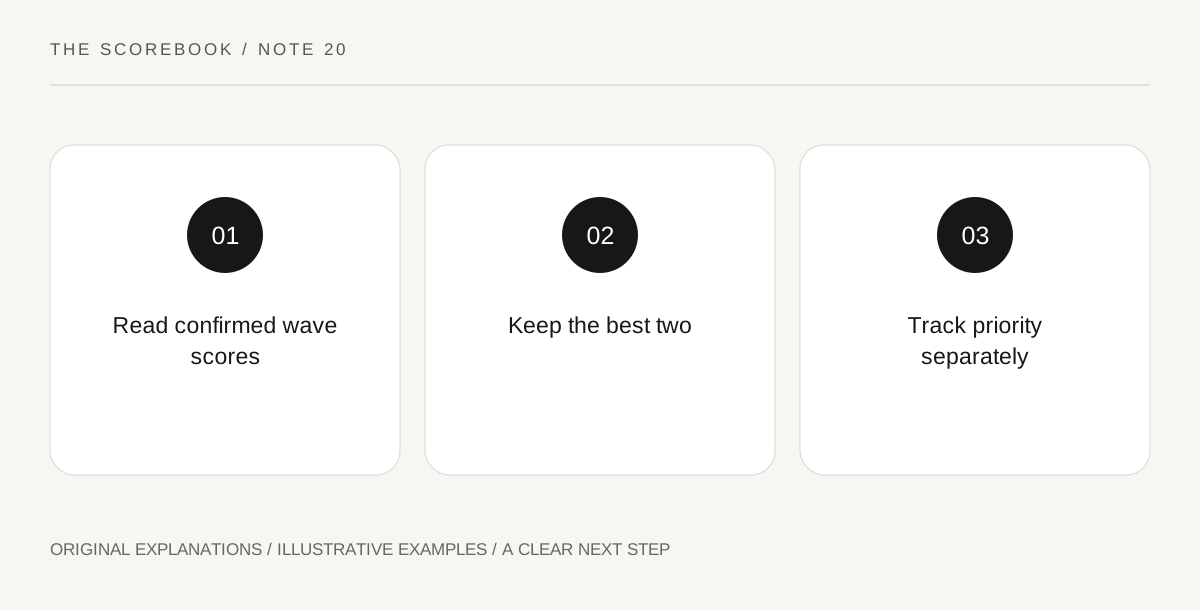
A scored ride and a heat total are different quantities. The ISA rulebook’s computer-scoring procedure combines the two best wave-score averages to rank the heat, subject to the applicable rules and penalties. A new low score does not automatically add to that total. Write every confirmed wave score in one line, then circle the two currently counting scores. This small exercise shows why the number of rides alone cannot identify the leader and why a later score can replace an earlier one rather than simply increase the count.
Calculate the improvement that actually matters
For a straightforward illustration with no interference adjustment, a surfer’s lower counting wave is the one a stronger new ride can replace. Compare the proposed replacement with that lower value, not with the total of every wave ridden. Keep a displayed “needs” figure distinct from your own arithmetic, because official rounding, ties and penalties can matter. Your calculation is an explanation of a simplified current situation, not a prediction that the ocean will provide an appropriate wave or that a particular ride will receive the required mark.
Wait for a score before changing the ledger
A broadcast may show a ride completed while the judges’ score is still pending. Write “pending” and leave the counting total unchanged until the official value appears. The wave’s length or the crowd’s reaction is not itself the final number. On replay, describe the visible manoeuvres and the sections of the wave used, while recognizing that judging considers the applicable criteria. Do not assign a precise score from one dramatic turn or compare scores across different heats as if conditions were necessarily identical.
Keep priority separate from ranking
Priority governs opportunities and interference in the heat; it is not the same as having the highest score. Record the priority indication in a different part of the note from the two-wave total. A surfer leading the heat can lack first priority, while a trailing surfer can hold it. Follow the official priority display and any interference ruling rather than using the score order to infer rights to a wave. If an adjustment is applied, use the corrected official total instead of forcing the ordinary two-wave exercise to explain a penalized result.
An invented replacement wave
Suppose A’s counting waves are 6.50 and 5.00, giving 11.50. B’s are 7.00 and 4.00, giving 11.00. A then receives a new 4.20, which does not replace either counting score and leaves 11.50 unchanged. B receives 5.20, replacing 4.00 and raising the total to 12.20. B now leads this simplified no-penalty comparison even if A has ridden more waves overall. The example supplies confirmed fictional scores; it says nothing about how long either surfer must wait for another opportunity or who has priority.
Practical checks
Optional checkboxes save only in this browser.
Questions that come up
Does every additional wave improve the total?
No. A new score must enter the counting set to change the ordinary two-wave total. In the illustration, a wave below both counting scores changes the ride list but not the total. Penalty situations need the official adjusted calculation.
Is first priority awarded to the current leader?
Priority and score ranking are different information. Follow the event’s priority display and rules rather than inferring wave rights from who is ahead. A trailing surfer can hold priority while trying to improve a counting score.
References and scope
These sources support the factual background. Examples and exercises are original illustrative teaching material. References do not imply endorsement.
- ISA Rulebook, July 2026 — Computer-scored heat totals from the best two wave scores, judging, priority and interference provisions.
- ISA Paris 2024 Surfing Team Leaders Guide — Introductory explanation of wave scores, two-wave heat totals and priority; historical event guide, not current schedules.