Ski jumping: distance is one part of the points total
The longest-looking jump does not necessarily produce the largest score. A ski-jumping result combines distance with style and, where applied, wind and gate adjustments. Follow those components individually so that the line on the snow and the final points graphic do not seem to contradict one another.
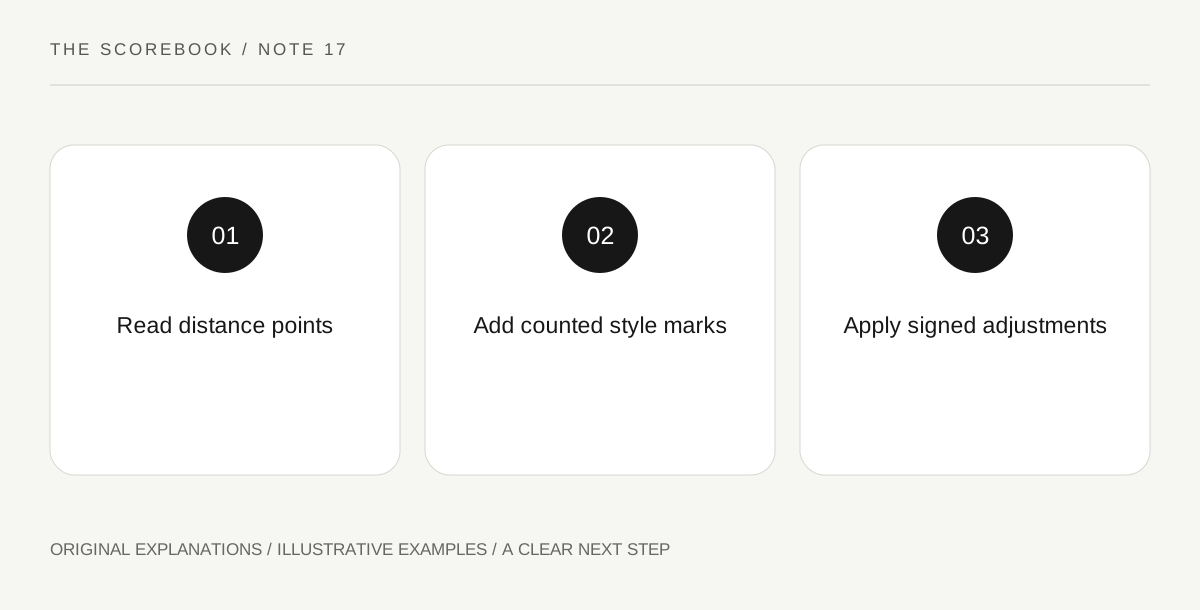
Original explanatory diagram. Read the full method and limitations below.
Keep metres and points apart
A jump’s distance is measured in metres, but the result uses distance points tied to the hill’s scoring framework. Do not treat one extra metre as one universal point or compare raw distances from two different hills as equal scoring opportunities. Put the hill, round and measured distance beside the official points contribution. This gives the number a setting. A hill-size label, a construction point and a television target line are related pieces of context, not interchangeable names for the athlete’s final score.
See style as more than a landing photograph
FIS style guidelines address flight, landing and outrun. A single neat-looking frame at touchdown cannot show all those phases. Watch the athlete’s transition from flight into landing and then the continuation down the slope. Describe stability and the visible sequence without assigning a precise deduction from a distant camera. In the familiar five-judge style calculation, the highest and lowest marks are removed and the remaining three added. Copy the official style total before attempting to explain how it affects the result.
Read adjustments as signed numbers
Where wind and gate compensation apply, the result graphic can add or subtract points beyond the distance and style contributions. Keep the sign with the number: minus 4 is not a four-point addition simply because the graphic uses a bright colour. These adjustments are part of the event’s specified scoring process, not a promise that every athlete experienced identical conditions. Use the official displayed contributions rather than trying to derive a compensation value from a waving flag or a commentator’s description of the breeze.
Compare complete jumps in the correct format
A qualification score, one competitive jump and a final event total can represent different stages. The competition format determines which rounds count and how the final classification is formed. Write the round beside the component line and read the current event regulations before summing multiple rounds. This is especially useful when highlights combine several attempts without their original headings. Your account should explain the official total for the contest being shown, rather than assuming every visible jump is automatically added into the same result.
An invented component sheet
Imagine five style marks of 18.0,18.5,18.5,19.0 and 19.5. Removing the highest and lowest leaves 56.0 style points. If the already-calculated distance contribution is 70.0, the wind adjustment is−4.0 and the gate adjustment is+2.0 in this illustration, the jump total is 124.0. These are supplied teaching components, not a formula for any real hill or weather measurement. The example shows how a signed adjustment changes the sum while the measured landing distance itself remains the same.
Practical checks
Optional checkboxes save only in this browser.
Questions that come up
Is a metre always worth the same number of points?
No. The scoring framework depends on the hill. Use the distance-points contribution shown in the official result, and do not compare raw metre gains across different hills as if they were universal scoring units.
Does the target line guarantee the lead?
Treat it as a viewing aid within the broadcast’s assumptions. The official result includes the full applicable scoring components. Wait for that result before equating a visually longer jump with a confirmed higher total.
References and scope
These sources support the factual background. Examples and exercises are original illustrative teaching material. References do not imply endorsement.
- FIS Ski Jumping International Competition Rules, currently linked edition — Distance points, judges’ style marks and result components.
- FIS World Cup Ski Jumping Men 2026–2027 rules — Current competition procedures and wind/gate-compensation context; filename is retained by FIS across updates.
- FIS Style Judging Guidelines — Flight, landing, telemark and outrun as judged phases.