Figure skating results: add TES and PCS before subtracting deductions
A figure-skating result has several numbers that can look like competing versions of the same score. Technical elements, programme components and deductions perform different jobs. Read their column labels first, then use the official segment total to understand how the separate pieces fit together.
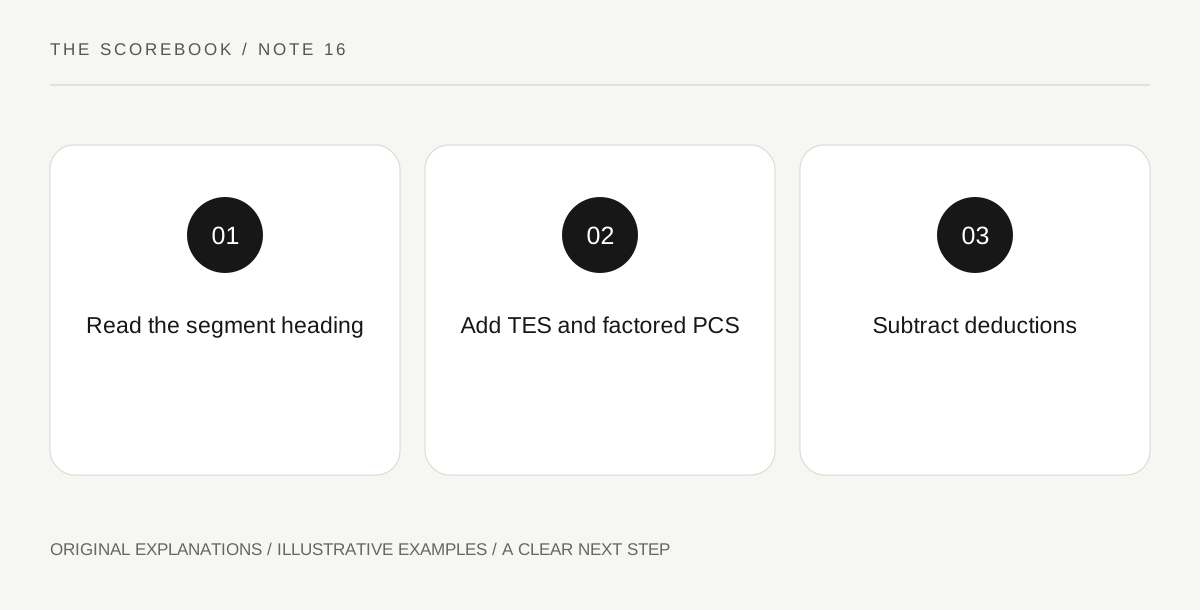
Original explanatory diagram. Read the full method and limitations below.
Begin at the summary row
The official results protocol separates Total Element Score, factored Total Program Component Score and Total Deductions. The segment total adds the first two and subtracts deductions. Start with that summary rather than trying to reconstruct every element from memory. Keep short programme or rhythm dance separate from free skating or free dance, and preserve the discipline. A segment score is not automatically the final competition total. Reading the title of the results sheet prevents a beautifully detailed calculation from being attached to the wrong performance.
Read one technical row slowly
An element row identifies what was credited, its base value and the Grade of Execution contribution used in the element score. GOE belongs in the technical-element calculation; it is not a synonym for the whole programme-component score. Use one row to trace the displayed base value and the resulting panel score. Do not simply add an individual judge’s raw GOE number to the programme total. The official calculation applies the scoring system’s conversion and panel procedures. Your first exercise is understanding the published columns, not replacing that calculation.
Give components their own meaning
Programme components assess broader performance qualities rather than adding another identical list of jumps. In a comparison, copy the factored PCS figure from the same segment for both skaters. This avoids mixing an unfactored mark with a final component contribution. You can then describe whether a segment’s numerical lead came from technical elements, components or the combination. A personally moving performance and a technically higher score are not interchangeable statements. Keeping those descriptions distinct leaves room to enjoy the programme while reading its adjudicated result accurately.
Reconcile totals without ranking from one mistake
A fall can be visually memorable, but the final comparison includes all credited elements, components and applicable deductions. Do not rank two programmes solely by counting the mistakes you noticed. Build the segment arithmetic from the official summary, then add the relevant segment totals to understand the competition result. If the provisional display changes after review, use the final published protocol and label the earlier value provisional. That makes the record explainable rather than treating two different published stages as contradictory scores for one unchanged calculation.
An invented segment comparison
Suppose A has TES56.00, factored PCS60.00 and deductions 1.00. The segment total is 115.00. B has TES59.00, factored PCS55.00 and no deduction, producing 114.00. B’s larger technical score does not by itself win this invented comparison, and A’s deduction does not by itself place A below B. The numbers are deliberately simplified teaching values, not a scoring assessment of any athlete. A full competition still requires the other applicable segment and official rules, so do not turn this one-segment illustration into a final medal table.
Practical checks
Optional checkboxes save only in this browser.
Questions that come up
Is GOE the same as PCS?
No. GOE contributes to the technical score for an element, whereas PCS is a separate assessment of programme qualities. Follow the protocol’s labelled columns instead of using “artistry” or “execution” as interchangeable names for every figure.
Can the skater with a fall still score higher?
Yes, because the comparison includes the full credited performance and applicable deductions. Counting visible falls alone does not reconstruct the total. Use the official summary and compare the same segment and discipline.
References and scope
These sources support the factual background. Examples and exercises are original illustrative teaching material. References do not imply endorsement.
- ISU: Figure skating overview, 2026 — Technical elements, execution, components and programme structure.
- ISU Four Continents 2026 judges’ details: rhythm dance — Actual official results layout: element base value, GOE, TES, factored PCS and deductions. Article calculations are separate invented examples.